40 Years of Sugar: From Kapil Dev’s Boost to a Bureaucrat’s Defence of 24 Grams”
August 30, 2026 - By ashish-singh
The Sugar Story India Never Got a Label For”
Boost, Bournvita, and a Bureaucrat: 40 Years of the Same Sugar Story
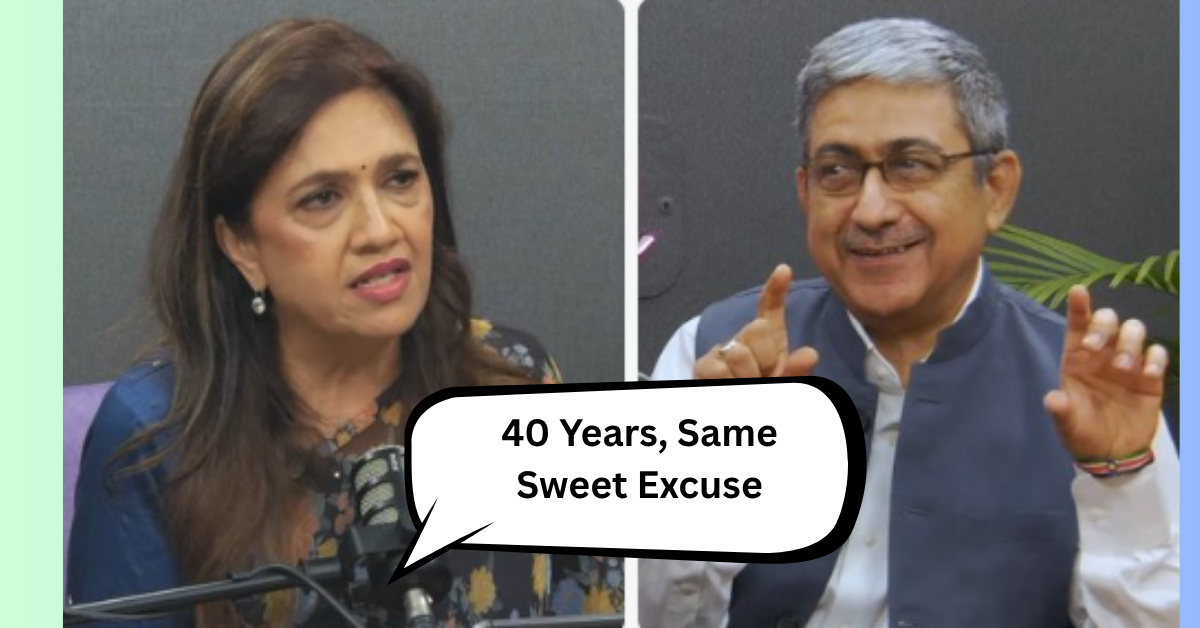
Smita Prakash asked India’s food safety chief a straightforward question on her podcast: why is a cereal marketed to children allowed to carry 24 grams of sugar per 100 grams? Rajit Punhani, CEO of FSSAI, told her Indians simply like sweeter products, and that the law permits it.
That answer bothered a lot of people online. It bothered me too, but not for the reason it first seemed to. Because if you actually sit with this story — not just the interview, but four decades of what got sold to Indian families as “health” and “energy” — you realise this isn’t a one-off gaffe from one official. It’s a pattern that goes back to 1985, and it hasn’t changed much since.
Let me walk you through both halves of it.
The number that exposed the answer
Here’s what makes Punhani’s response hard to defend: weeks before that interview, FSSAI’s own technical team published a draft notification proposing that any solid food carrying more than 3 grams of sugar per 100 grams be classified as “high in added sugar.” That’s not an activist’s number — it’s built on ICMR’s 2024 dietary guidelines, and it’s sitting in the Gazette of India right now, out for public comment.
So a cereal at 24g/100g isn’t sitting near a grey area. By the regulator’s own upcoming yardstick, it crosses the “high sugar” line by nearly eight times. “People like it sweet” isn’t an answer to that. It’s a deflection from it.
It’s bigger than one cereal — but the full picture is more useful than the outrage
It’s tempting to frame this as India uniquely getting the inferior version of everything while the West gets the clean one. The real data is messier, and the messier version makes a stronger case.
In 2024, Public Eye and the International Baby Food Action Network lab-tested Nestlé’s Cerelac baby cereal across markets. In India, the 15 variants tested carried an average of close to 3 grams of added sugar per serving. In Switzerland, Germany and the UK, the identical product line carries zero. That gap is real. But African markets tested nearly double India’s number — around 6 grams per serving, going up to 7.5g in Kenya — and a follow-up investigation in late 2025 found the same pattern holding across Africa, Asia and Latin America. This isn’t “India vs the West.” It’s multinationals formulating to whatever floor the local regulator allows, wherever that floor is low. Nestlé only rolled out no-added-sugar Cerelac variants in India after the 2024 exposé went public and its share price took a hit — not before.
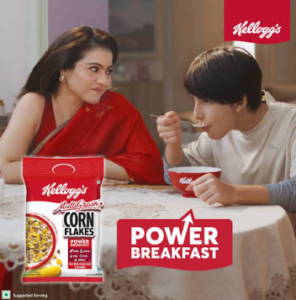
On packaged cereal, a 2016 global audit by World Action on Salt and Health, covering Kellogg’s and Nestlé across 29 countries, cuts a different way. Kellogg’s Crunchy Nut Cornflakes carried the same 35g/100g sugar in the UK as in India — same recipe, same number. But Kellogg’s Corn Flakes sold in India had the highest salt content of any country in that study: 1.93g/100g, 46% more than the identical product in Argentina or Brazil. So formulations genuinely do vary by market — sometimes India comes off worse, sometimes it doesn’t — and not one cereal, out of hundreds tested across 29 countries, qualified as genuinely low in sugar. It’s a global industry problem that India happens to regulate loosely, not a uniquely Indian insult.

On juice: FSSAI has actually acted here, which is worth crediting. In June 2024, it ordered companies to drop “100% fruit juice” claims from reconstituted juices, because the primary ingredient in many of them is water, with fruit concentrate making up a limited share. That’s real enforcement. The fair criticism isn’t that FSSAI never does anything — it’s that action only comes after a Guardian investigation, a Swiss NGO’s lab report, or a Supreme Court order, never ahead of one.
That last point is the whole story, actually. Look at FSSAI’s own record before the Supreme Court on food labelling. For months, it told the Court that aligning with global front-of-pack warning standards was “difficult” — a position that matched industry’s objections almost word for word. Only after the Court pushed back hard, pointing to India’s rising obesity burden, did FSSAI come back with a proposed red-hexagon warning label for products high in sugar, salt or saturated fat. Regulation here doesn’t lead. It follows, reluctantly, once the pressure gets loud enough.
Now rewind 40 years, because this pattern didn’t start with cereal
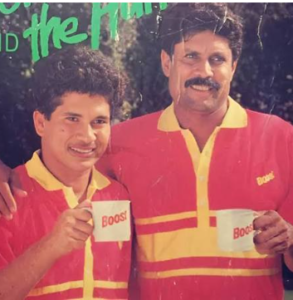
In 1985, Kapil Dev looked into a camera fresh off India’s 1983 World Cup win and said, “Boost is the secret of my energy.” It was the first celebrity-fronted ad in India’s health-drink category, and it worked exactly as designed — it bypassed mothers and spoke straight to kids who idolised Kapil. Sachin Tendulkar carried that same line for almost two decades from 1991. Sehwag, Dhoni and Kohli followed.
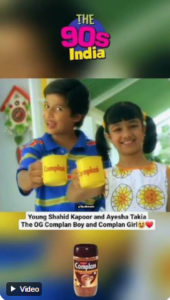
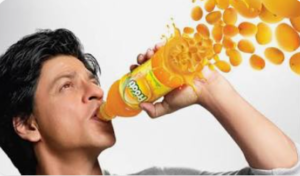
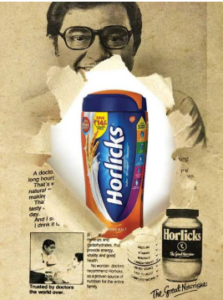
Boost wasn’t alone. Complan had Shahid Kapoor and Ayesha Takia as child actors — “I am a Complan boy/girl” — later Sachin Tendulkar, and in 2024, Madhuri Dixit. Bournvita ran with Amitabh Bachchan for years, then Rohit Sharma and Twinkle Khanna. Horlicks spent decades promising parents their kids would grow “taller, stronger, sharper.” And cold drinks recruited nearly every big name in the country — Sachin, Shah Rukh Khan, Salman Khan, Akshay Kumar, Kohli, Dhoni, Aishwarya Rai, Sourav Ganguly, Rahul Dravid. Aamir Khan’s “Thanda matlab Coca-Cola” line is a big part of why a cold drink became the default thing you offer a guest in an Indian home. Frooti — a mango drink that runs high in added sugar — had Shah Rukh Khan and Alia Bhatt fronting it.
Two names on that list are worth pulling out separately, because they walked away before the regulators did anything. Amitabh Bachchan said in 2014 that he stopped endorsing Pepsi after a child asked him why he was selling “poison.” Virat Kohli quietly exited his Pepsi contract in 2017. That discomfort was building well before any government body moved on it.
What was actually in the cup — and why we can’t fully answer that
Here’s an uncomfortable admission, and I think it’s an important one: there’s no 1995 nutrition label for Complan or Bournvita to check against, because India didn’t require one back then. That’s not a footnote — it’s the actual scandal. These products were sold to children for decades with nobody measuring or disclosing what was inside them. The only place we get hard, comparable numbers is where regulation or public pressure eventually forced the disclosure.
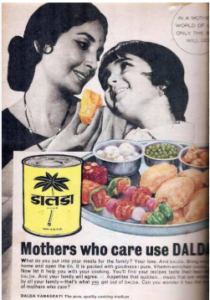
Trans fat is the clearest example, because it comes with a real before-and-after. Vanaspati — the hydrogenated cooking fat known across Indian kitchens as Dalda — carried trans fat levels some studies put as high as 50%, and it was completely unregulated for most of the 20th century. FSSAI didn’t set its first cap until 2013, at 10%. That came down to 5% in 2015, 3% in 2021, and finally 2% by January 2022, in step with the WHO’s global elimination target. Seventy years of no ceiling, followed by nine years of gradually catching up.
Sugar tells a more recent version of the same story. In April 2023, a content creator named Revant Himatsingka — now known as “Foodpharmer” — pointed out on Instagram that Bournvita carried somewhere between 32 and 37 grams of added sugar per 100 grams, depending on which report you read, and suggested the brand’s tagline should read “Taiyari diabetes ki” instead of “Taiyari jeet ki.” Cadbury sent him a legal notice. He took the video down and apologised. The National Commission for Protection of Child Rights investigated anyway — and in the process found there’s no legal definition of “health drink” under Indian food law at all. In April 2024, the Ministry of Commerce had Bournvita, Complan, Horlicks and Boost delisted from the “health drink” category on e-commerce platforms. Eight months after the original video, Bournvita cut its added sugar by roughly 14-15%. Today, per 100 grams, Complan still carries about 24 grams of total sugar and Horlicks about 13.5 grams — better than before, but still a lot for something sold as children’s nutrition.
Notice the sequence in both stories: a lab test or a viral video forces the issue, a legal threat follows, and only then does the number quietly change on the pack.
What the country actually looks like after 40 years of this
This next part needs to be handled carefully, because no single drink or ad campaign causes a disease on its own — diet, physical activity, urbanisation and genetics all move together. But look at the direction of the national numbers over the exact decades this advertising ran, and it’s hard to call it a coincidence:
-
India’s diabetic population rose from roughly 33 million in 2000 to 72 million in 2021.
-
The ICMR-INDIAB study found generalised obesity at 28.6% and abdominal obesity at 39.5% nationally.
-
NFHS-6 (2023-24) recorded obesity among women rising from 24% to 30.7%, and among men from 22.9% to 27.3%, in under three years.
-
Overweight children under five rose from 2.1% in 2015-16 to 3.4% in 2019-21. India now has the second-highest number of obese children in the world, after China.
-
At the same time, separate surveys put protein deficiency among Indians anywhere between 60% and 80%, depending on the study — meaning the same population that’s getting heavier is often also under-protein.
That last point isn’t a contradiction. It’s exactly what happens when cereal, malted drinks, sugar and refined carbohydrates take up more room on the plate than dal, eggs, milk and pulses do. You can be overweight and undernourished on the same diet. India increasingly is.
The thread that ties 1985 to this podcast interview
Nobody forced these companies to formulate their products this way. And nobody forced the regulator to look away for as long as it did. What’s changed the numbers, every single time, is public pressure — a lab report from a Swiss NGO, a Supreme Court order, a 24-year-old with an Instagram account and 1.5 million followers. Not one of these corrections happened because a company or a regulator decided, on its own, that children’s health mattered more than a formulation cost.
Rajit Punhani’s answer on that podcast fits neatly into this timeline. It’s not an isolated slip — it’s the same institutional instinct that told the Supreme Court global labelling standards were “too difficult,” the same instinct that let vanaspati run at 50% trans fat for seventy years, the same instinct that needed a viral video before anyone checked what was actually in Bournvita.
What should actually change
Three concrete things, not slogans:
-
Extend the 3g/100g “high sugar” threshold FSSAI has proposed for school food to every product marketed at or packaged for children — not schools alone.
-
Finalise and enforce the front-of-pack warning label the Supreme Court has been pushing for, instead of treating “difficult to implement” as a permanent position.
-
Publish a public sugar and trans-fat reduction timeline for children’s food, the way the UK’s soft drinks levy came with a fixed reformulation deadline — not a voluntary, unmonitored promise that only moves after the next scandal.
Credit where it’s due: to Smita Prakash for asking the question most interviews wouldn’t touch, and to Revant Himatsingka for proving one honest video can move a $2 billion brand faster than a regulator can in a decade. The uncomfortable truth is that both of them had to do a government body’s job for it.
If you grew up on Boost, Complan or a cold drink with your favourite cricketer’s face on the tin, you’re not the villain in this story — you were a kid who trusted an ad, same as everyone else. But the next generation shouldn’t have to wait for a viral video to find out what’s in theirs. Say so. Tag @FSSAI. Regulators respond to noise, and right now there still isn’t enough of it.
—
Sources referenced: Business Standard, IndiFoodBev, Forbes India, ETV Bharat, Business Standard (FSSAI CEO appointment, HFSS draft thresholds, front-of-pack labelling); Public Eye & IBFAN (2024, 2025) on Nestlé Cerelac; World Action on Salt and Health global cereal survey (2016); FSSAI directive on “100% fruit juice” claims (June 2024, via ThePrint, Packaging Gateway, S.S. Rana & Co.); afaqs!, Media Samosa, MarkHub24 (Boost/Kapil Dev/Tendulkar advertising history); ThePrint, The Juggernaut, Republic World (Complan/Horlicks/Bournvita endorsement history); ThePrint “SRK, Salman, Kohli” (soft drink endorsements, Bachchan and Kohli exits); Business Today, OpIndia, BollywoodShaadis, Wikipedia/FoodPharmer (Bournvita sugar reduction, NCPCR ruling); Outlook India, USDA-FAS/FSSAI reports, NuFFooDS Spectrum (trans fat regulatory history); ICMR-INDIAB (The Lancet Diabetes & Endocrinology, 2023); NFHS-6 summary (2023-24); ORF, ETV Bharat, The Wire (protein deficiency surveys).